• Skip to main content
  • Skip to footer

Daniel Im

Pastor + Author

  • About
    • Contact
  • Speaking
    • Speaking Request
  • My Books
    • The Discipleship Opportunity
    • You Are What You Do
    • No Silver Bullets
    • Planting Missional Churches
  • Leadership
    • Church Multiplication
  • Life

Leadership

Adaptive Decision Making, Change, and Leadership – Part 2

March 19, 2019 By Daniel Im

Let’s pick up from where we left on in Part 1 of this series of articles on adaptive decision making, change, and leadership. Be sure to start by reading Part 1 if you haven’t yet done so.

Over the last century, here’s the reason most churches and organizations have been able to scale and support the growth that they’ve experienced.

It’s because of the modern day “scientific management model,” which rests primarily upon two elements:

  1. “Absolutely rigid and inflexible standards throughout your establishment.”
  2. “That each employee of your establishment should receive every day clear-cut, definite instructions as to just what he is to do and how he is to do it, and these instructions should be exactly carried out, whether they are right or wrong.”[1]

I’m not saying that these two elements run the shop in every church and organization today. I’m just saying that they are the foundation that modern day management theory—both inside and outside the church—has been built upon, and it doesn’t work anymore because…

  • You can’t just set it and forget it
  • You can’t just keep your head down, do your work, and expect to succeed and hit your goals
  • Your success isn’t wholly dependent on you
  • If the only time you talk about development is the annual performance review, you won’t grow
  • If the only time you connect with your volunteers and leaders are on Sunday or in formal training environments, they won’t feel connected
  • If the only things you do are the things on your job description, your team won’t win
  • In fact, if you’re not revisiting your job description multiple times a year, it will become outdated quick
  • And if the only time you talk with your team members is during official team meetings, your team will move too slow
  • And if you’re not changing your website every 2-3 years, watch out…irrelevancy is just around the corner
You can’t just set it and forget it anymore.

Click To Tweet

[Read more…] about Adaptive Decision Making, Change, and Leadership – Part 2
Adaptive Decision Making, Change, and Leadership – Part 1

March 12, 2019 By Daniel Im

https://www.danielim.com/wp-content/uploads/2019/03/Autonomous-Vehicle.mp4

Watch this clip of a traffic intersection.

As you were watching it, what did you think was going to happen?

When I first saw this clip, it reminded me of the T-bone accident I was in as a child. I don’t really remember much around the way it happened, or what I was doing when it happened, but as a child, I flew right into the windshield of our car.

It happened when we were on our way home from the airport after picking up my mom. She had just returned after visiting family in Korea. Someone ran a stop sign and boom. Just like that, my hopes of ever becoming a doctor or rocket scientist flew right out the window…or should I stay straight into the window?

Alright, so back to the traffic intersection.

This is a video from a computer simulation that the Autonomous Intersection Management project at the University of Texas at Austin was conducting. When Peter Stone, the professor heading up this project, discovered that “25 percent of accidents and 33 percent of the thirty-three thousand auto deaths each year in America occur at intersections, and 95 percent are attributable to ‘human error,’” he and his team wanted to do something about it.

But how is this chaos better? Doesn’t this seem like a T-Bone accident just waiting to happen, rather than a way to prevent it from happening?

The interesting thing about this simulation is that every car you see here is being driven autonomously. In other words, they’re all self-driving cars.

This being the case, you can actually plot the trajectories of each car long before they arrive at the intersection, which means there’s no need for the typical breaking, stopping, and accelerating that normally characterizes four way intersections. This also means that you can get rid of traffic lights and stop signs, since every self-driving car would be communicating, sensing, and noticing the other.

To self-driving cars full of sensors and cameras, this simulation makes complete sense. To us, it doesn’t—it seems like utter chaos.

And here’s the reason.

It’s because of a thing called, “mental models.”

[Read more…] about Adaptive Decision Making, Change, and Leadership – Part 1

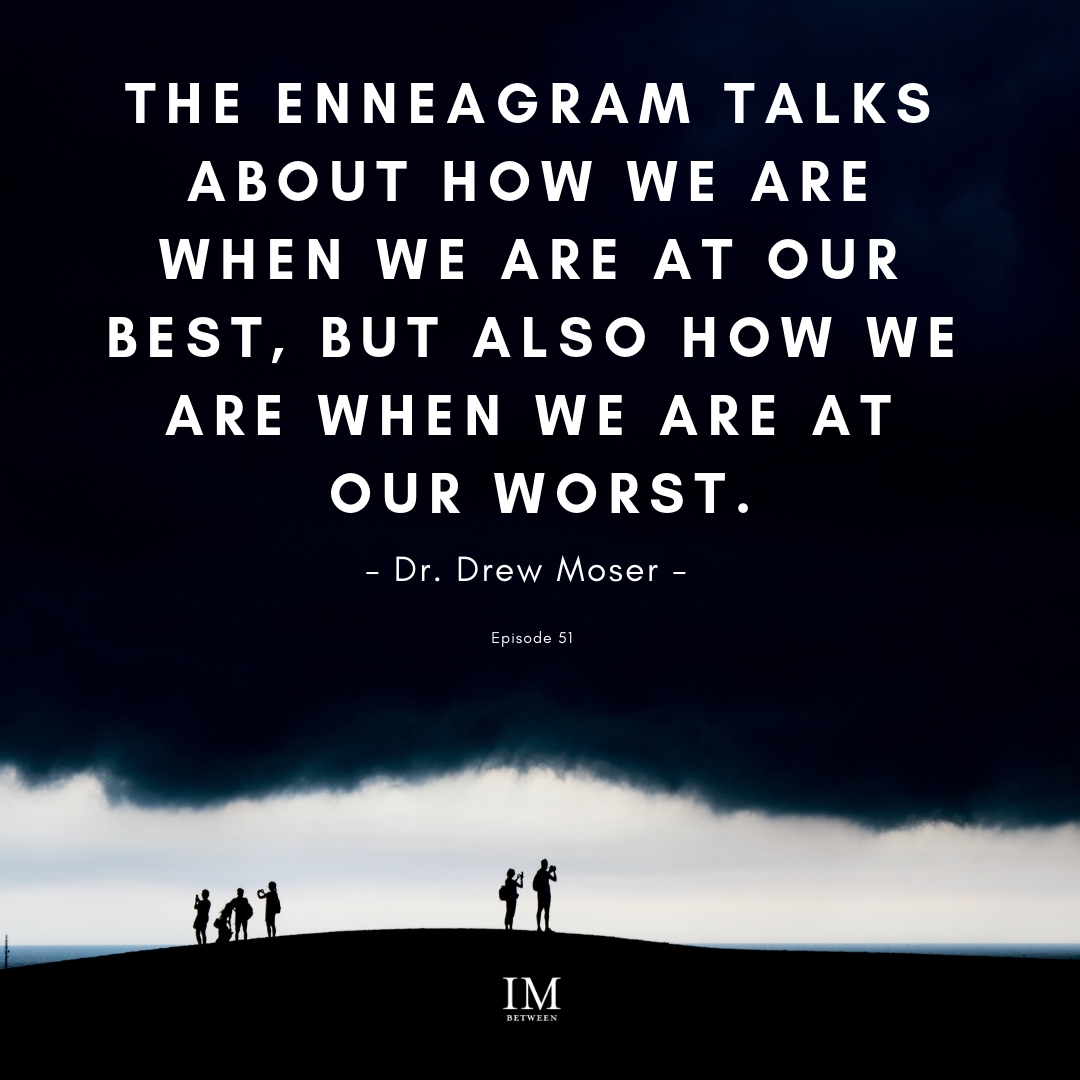
The Enneagram, Leadership, and Knowing Yourself

February 12, 2019 By Daniel Im

Knowing yourself has been a neglected and under-appreciated aspect of life and leadership for far too long.

Now don’t get me wrong. I’m not talking about promoting yourself, nor am I advocating navel gazing either. I’m talking about knowing yourself—your strengths, weaknesses, passions in life, the way you react under stress, how you operate within a team, and on and on.

Knowing yourself has been a neglected and under-appreciated aspect of life and leadership for far too long.

Click To Tweet

And while there seems to be a myriad of personality assessments for each and every one of those areas, what’s been missing is one that helps you identify your core motivations—the why behind it all.

Sure, the Myers Briggs might help you identify how you best recharge (introvert/extrovert), the StrengthsFinder might help you discern how you best approach tasks, and the Birkman might help you understand the best environment for you to work in, but what each of them miss is uncovering why you do what you do.

[Read more…] about The Enneagram, Leadership, and Knowing Yourself

The Truth Behind Fame

February 5, 2019 By Daniel Im

“Studies say four minutes of uninterrupted eye contact increases intimacy.”

So we did it. For four minutes, Christina and I looked into each other’s eyes…and it went a lot better than the first time I did it with someone else. 

This someone else was a complete stranger—okay, maybe he wasn’t a complete stranger since I had met him a couple hours ago at a conference we were a part of—but that’s how it felt. And yes, it was incredibly awkward and I don’t recommend it, but I had no choice. At least he wasn’t a she. I couldn’t imagine doing this exercise with a woman who wasn’t my wife.

Nevertheless, after having gone through that deathly awkward experience where I felt inappropriately vulnerable with this stranger, I was interested to see how it would feel to do this exercise with my wife.

And I’m not being sarcastic here. I was actually excited to do this with my wife because I wanted to see what would happen. I was curious to see what I would feel and think during those four minutes of silence.

So we did it. For four minutes, we looked at each other in the eyes and here’s what I realized.

I don’t need other people to see me because I am already seen.

When Christina was looking at me in the eyes, I realized that it wasn’t because of anything I was doing. I wasn’t performing. I wasn’t speaking. I wasn’t podcasting. I wasn’t writing. I wasn’t teaching. I wasn’t leading.

I wasn’t doing anything—yet I was seen.

[Read more…] about The Truth Behind Fame

The Best Leaders Learn From Failure

January 29, 2019 By Daniel Im

“An inventor fails 999 times, and if he succeeds once, he’s in. He treats his failures simply as practice shots.”

Those are the words of the famous American inventor, engineer, and businessman who just happens to hold an unimpressive 186 patents—Charles Kettering.

Wow. One hundred eighty six patents!

His patents include the electrical starting motor, leaded gasoline, and the Freon refrigerant that goes in our refrigerators and air conditioning systems. This is some serious inventing he did—unlike those who win the Stupid Patent of the Month award (it’s actually a thing).

Here’s what stood out to me about this quote: Although everyone fails—especially  leaders—the best leaders learn from their failures and keep on moving forward.

Although everyone fails—especially leaders—the best leaders learn from their failures and keep on moving forward.

Click To Tweet

Where will your failure take you?

When I visited the Pacific Science Center in Seattle, WA over Christmas, I came across the Wall of Failure. Just as it inspired me to keep on stepping out in faith and trying new projects, I hope it does the same for you.

Here are the names and descriptions of some of the failed leaders on the Wall of Failure who kept on moving forward. This is directly from the exhibit.

J.K. Rowling – failed author

“An unemployed, single mother on welfare whose first children’s book was rejected by all 12 major publishers.”

Albert Einstein – failed genius

“A poor student who didn’t speak until age 4 or read until age 7, Albert was considered “slow” by family and teachers and was eventually expelled from school.”

Einstein couldn’t read until 7.

Click To Tweet

Michael Jordan – failed athlete

“A somewhat promising basketball player who barely met minimum height requirements, Michael Jordan was not allowed to join his high school’s varsity team.”

Michael Jordan was too short to join his high school team.

Click To Tweet

[Read more…] about The Best Leaders Learn From Failure

  • « Go to Previous Page
  • Page 1
  • Interim pages omitted …
  • Page 15
  • Page 16
  • Page 17
  • Page 18
  • Page 19
  • Interim pages omitted …
  • Page 83
  • Go to Next Page »

Footer

LET’S CONNECT

  • Facebook
  • Instagram
  • LinkedIn
  • Twitter

Copyright © 2026 · Daniel Im

  • About
  • Speaking
  • My Books
  • Leadership
  • Life