Archive - 2011

An Intro to Disciplining Your Children

Disciplining your children is probably one of the most controversial topics in our society today. Every culture has a different norm or standard for what’s okay or not. Not only that, but the times have changed from when we were kids so that everyone is pretty much tip toeing around the issue.

For example, did you hear the recent story about a mom using hot sauce and cold showers to discipline her child? Click here to read about it, or check out this video below.

This post is not meant to be THE ANSWER to all your questions, but rather a starting place or a place of resource as you determine what your disciplining style will be for your family.

Rather than doing the whole hot sauce and cold shower thing, what about this method for disciplining?

Here’s a solution for a perpetually messy bedroom: Explain to your child, “I cannot bear to look at this room anymore — it’s too messy! I’m going to turn off the circuit breaker so I can’t see it. When it’s clean enough for me to tolerate, let me know and I’ll turn your power back on.”

Haha, okay that’s pretty funny and I guess that would only work during the day time. Nevertheless, the need to discipline is a real issue and here are some reasons why we should discipline our children:

Continue Reading…

Re-Imagining Theological Education

I just came across some excellent videos (see below) illustrating the thoughts on theological education and seminary that I’ve been wrestling with for the past couple of years. You can read about my thoughts here.

You can also read a great article by Leonard Sweet about how seminaries have to reinvent themselves here.

I am encouraged to not only see 3DM working through this concept, but also Fuller Seminary.


Here are pertinent sites discussing the matter:

Your Desert Experience in Ministry – Part 2/4

In part one, I described the rationale behind desert or isolation experiences in ministry. Click here to read about it. Essentially, God uses desert experiences to accomplish things through us that we would never be able to accomplish apart from these desert experiences.

Today I would like to go a bit more in depth and define the different types of desert experiences one might experience in ministry. There are two broad categories of desert experiences. Shelly Trebesch calls them involuntary and voluntary isolation experiences in her book, Isolation: A Place of Transformation in the Life of a Leader.

Another way of looking at them is: unplanned and planned desert experiences.

Continue Reading…

Eating as a Holy Act

Did you know that over the past three decades, there has been a 45 percent decrease in entertaining friends and a 33 percent decrease in families eating together? And more than half of those families watch television as they eat together – I know it…that’s what my family did growing up (research from Robert Putnam’s Bowling Alone).

What did you eat today? Whom did you eat it with? When’s the last time you had a meaningful time of relationship and community with another person? Was it around food? Most of us not only organize our day around our meals, but is is the social glue that connects families and friends together. Isn’t that why the big holidays, like Christmas and Thanksgiving are celebrated with family, friends, and a big meal?

However, we oftentimes eat without knowing and understanding the significance of it, other than satisfying that hunger or satiating that palette.

So what would it look like if we began seeing food and our meal times through the eyes of Jesus? How did he view the table?

Well, in the New Testament, here are three of the ways that the sentence “The Son of Man came…” is completed:

  1. …not to serve, but to serve (Mark 10:45);
  2. …to seek and to save the lost (Luke 19:10);
  3. …eating and drinking (Luke 7:34).

Your Desert Experience in Ministry – Part 1/4

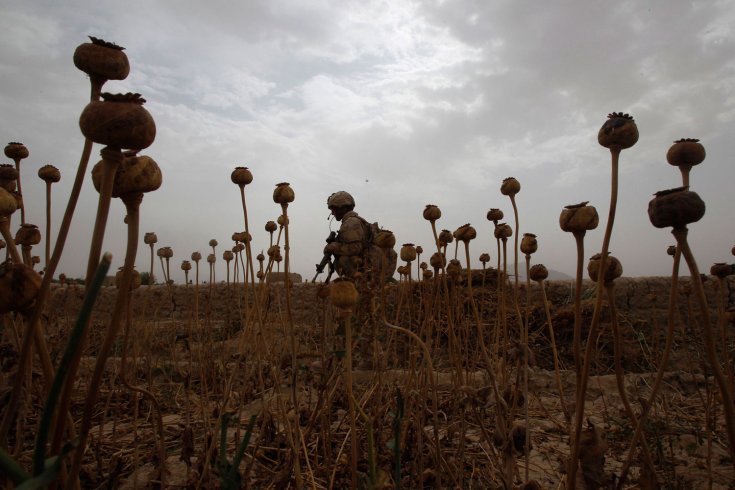
Baz Ratner—Reuters

Although leading, serving, and being with people is a central component to ministry, every leader will go through desert experiences, or isolation experiences, where one is forced out of one’s context, or where one will voluntarily leave one’s context.

If you haven’t yet gone through one, then expect to. If you have, then you probably know that these experiences are the most formative experiences in our lives: personally, spiritually, and ministerially.

This is part one of a four part series where I will explore these desert experiences in ministry. Today I will explain the rationale behind these isolation experiences.

God uses desert experiences to accomplish things through us that we would never be able to accomplish apart from these desert experiences. In fact, some of our ultimate leadership insights and contributions may come from these desert experiences.

Continue Reading…

Faith and Kids – the Parent’s role

Deut. 6:1   These are the commands, decrees and laws the LORD your God directed me to teach you to observe in the land that you are crossing the Jordan to possess,  2 so that you, your children and their children after them may fear the LORD your God as long as you live by keeping all his decrees and commands that I give you, and so that you may enjoy long life.  3 Hear, O Israel, and be careful to obey so that it may go well with you and that you may increase greatly in a land flowing with milk and honey, just as the LORD, the God of your fathers, promised you.

Deut. 6:4    Hear, O Israel: The LORD our God, the LORD is one.  5 Love the LORD your God with all your heart and with all your soul and with all your strength.  6 These commandments that I give you today are to be upon your hearts.  7 Impress them on your children. Talk about them when you sit at home and when you walk along the road, when you lie down and when you get up.  8 Tie them as symbols on your hands and bind them on your foreheads.  9 Write them on the doorframes of your houses and on your gates.

We can’t pass something onto our kids that we don’t have ourselves. After all, the above passage says that we need to love the lord our God with all OUR heart, OUR soul, and with all OUR strength…this is before he even mentions impressing it on your child. So what’s first? What should our priority be?

If we want to be great parents and see our children grow up to know, love, and serve Jesus, then we need to be doing that first. 

Attending a weekend service, participating in a group, and meeting with others in your group on a casual basis are all designed to be reinforcements for the way we raise our children and draw closer to God…they aren’t intended to be replacements for us raising our kids up in the faith and us taking personal responsibility for our spiritual lives.

Grab a pencil.

Continue Reading…

Using Mind Maps to Research and Write

How do you organize your thoughts when you are writing a proposal? Or a paper? Or a research project?

I used to gather all my information in a normal word document, or a note in Evernote and have everything in a linear fashion using 1. a) b) c) , etc, but when it came time to write, I found it was too difficult to organize everything and write efficiently.

I’ve been experimenting with mind maps for a while now, and when writing a paper for one of my classes, I decided to use it to organize my thoughts.

Here is an image of the mind map I used to gather research and organize my thoughts when I wrote my paper entitled, “Planting Multiplying Spirit-Empowered Churches.”

What do you use to organize your thoughts and present them?

P.S. In case you’re wondering, the best program that I’ve discovered for mac is “Mind Node.” I have the free version on my mac, and the paid version on my ipad.


Page 1 of 812345»...Last »